 Skip to main content

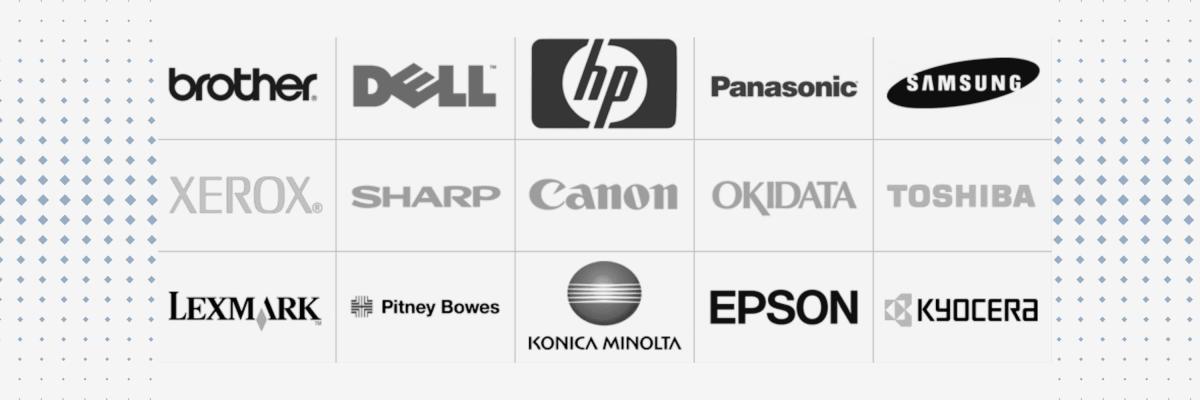
According to 360 Research, there are more than 40 global printer manufacturers competing in the printer market. Yet despite the size of the market, only a handful of printer brands consistently lead the industry worldwide.
For buyers, that creates a familiar problem: too many options that look similar on the surface, but differ in meaningful ways once you dig deeper. Features, long-term reliability, support, and software ecosystems often matter far more than logos or price tags.
As a locally managed print vendor for nearly 40 years, we’ve worked with businesses across a wide range of industries and print environments. That experience gives us a clear view of how different printer manufacturers compare in real-world use.
We specialize in Xerox products and will reference them throughout this article. That said, there are several other printer brands whose offerings rival Xerox in quality and capability. Claiming otherwise wouldn’t be honest.
In this guide, we’ll break down the top printer brands in 2026, explain what each does best, and help you understand how to evaluate printer manufacturers based on your specific needs.
If you’re early in the research process, start with our free Buyer’s Guide below. It walks through everything you should consider before choosing a printer brand or model.
Table of Contents
- How We Chose the Top Printer Brands
- Top Printer Brand Questions, Answered
- The 5 Leading Printer Brands in the Industry
- How Do I Know Which Printer Brand to Choose?
- Alternative to Buying Directly From a Printer Brand
- Frequently Asked Questions About Printer Brands
- Need Help Choosing the Right Printer Brand?

The Factors That Went Into This List
Before reviewing specific brands, it’s important to understand how this list was evaluated.
Company Reputation and Industry Presence
A printer brand earns credibility through long-term performance, innovation, and customer trust. Companies on this list maintain strong global reputations and broad adoption across business environments.
Product Capabilities and Features
While print speed and color output are important, printer manufacturers differentiate themselves through hardware quality, software platforms, security tools, and workflow features.
Market Data and Adoption
Shipment volume and market share help validate which brands are widely used and supported. Data was referenced from Statista, IDC, and Mordor Intelligence to corroborate industry position.
Financial Stability
Revenue alone doesn’t determine quality, but financial health often reflects a brand’s ability to invest in innovation, service infrastructure, and long-term support.
Top Printer Brand Questions, Answered
What are the top printer brands?
The top printer brands in 2026 include HP, Canon, Xerox, Brother, and Epson. These manufacturers lead the market due to reliability, global availability, feature depth, and strong support ecosystems.
What is the most reliable printer brand?
Printer reliability depends on factors like usage and environment. Xerox, Canon, and Brother are commonly recognized for durability in business settings. When it comes to determining reliability, duty cycles, build quality, and service support matter more than brand name.
What printer brand offers the best value?
The best-value printer brand depends on total cost of ownership. Brands that combine hardware longevity, efficient consumables, and strong support often deliver better long-term value than lower upfront-cost options.
The 5 Leading Printer Brands in the Industry
HP
HP is one of the most widely recognized printer manufacturers in the world. Founded in 1939, the company played a major role in shaping modern office printing, particularly with the introduction of the LaserJet.
HP manufactures both laser and inkjet printers for home, office, and enterprise environments. Its printer lineup supports a wide range of use cases, from basic document printing to high-volume office workflows.
HP also offers cloud-connected features through its HP+ Smart Printing System, which enables remote management, mobile printing, and automated updates. In addition to hardware, HP provides its own Managed Print Services focused on security, flexibility, and centralized device management.
Because of its scale, broad product availability, and strong market presence, HP remains one of the most commonly considered printer brands worldwide.
Related comparison: HP vs Xerox
Canon
Canon has a long history in imaging technology, dating back to its founding in Japan in 1933. While the company is well known for cameras, it also maintains a substantial presence in the printer market.
Canon manufactures a wide range of printers, including office devices, production presses, large-format printers, and specialty systems. Its product lineup supports everything from everyday business printing to high-end commercial applications.
In addition to standard office printers, Canon offers specialized solutions such as label printers, badge and card printers, and industrial marking devices. Many Canon printers also integrate with cloud-based print and document workflows.
Canon’s reputation for image quality, combined with its diverse product catalog, makes it a strong option for organizations with varied printing needs.
Related reading: Canon vs. Xerox
Xerox
Xerox is one of the most established names in the printing industry, with origins dating back to 1906. Unlike many competitors, Xerox focuses primarily on print, document, and workflow technologies.
Xerox printers use ConnectKey technology to support workflow automation, cloud integration, and on-device applications. These features allow users to scan, share, and process documents directly from the printer interface.
Many Xerox devices integrate with document management platforms such as DocuShare, helping organizations manage information more efficiently and securely. Xerox designs printers for office, production, and remote work environments, with a strong emphasis on software-driven capabilities and security controls.
Because of its focus on productivity, security, and workflow enablement, Xerox is often evaluated not just as a printer brand, but as a document technology platform.
Related reading: 4 Xerox Features That Stand Out Against Other Printer Brands
Brother
Brother is a global technology company founded in 1908, with a strong focus on practical office equipment. Its printer strategy centers on reliability and straightforward operation.
Brother manufactures printers, scanners, and label makers designed primarily for small offices and workgroups. Many Brother devices are built to support consistent daily use without complex setup or feature overload.
Brother printers are commonly used in environments where ease of use, durability, and predictable performance are priorities. The company maintains a global distribution presence and continues to expand its footprint in business printing.
Because of its emphasis on simplicity and dependability, Brother is often considered by organizations looking for practical, no-frills office printers.
Related reading: Brother vs. Xerox
Epson
Epson is a Japanese technology company founded in 1942 and is known for its innovation in inkjet printing. The company introduced the world’s first compact printer and continues to focus heavily on ink-based technologies.
Epson manufactures a broad range of printers, including inkjet, EcoTank, photo, and specialty devices. EcoTank printers use refillable ink reservoirs instead of traditional cartridges, which can reduce long-term ink costs for high-volume users.
In addition to office and home printers, Epson supports specialty applications such as photo printing, craft printing, and industrial use cases. Epson also offers its own paper and media products designed to work with its printers.
Epson’s focus on ink efficiency and specialty printing makes it a strong option for environments where color quality or media flexibility is a priority.
Related reading: Epson vs. Xerox
How Do I Know Which Printer Brand to Choose?
Choosing the right printer brand depends on how and how often you print. No single manufacturer is best for every situation.
Ask yourself:
- What features do I actually need?
- What level of print volume will I support?
- How important are security and workflow tools?
- What support options matter most long-term?
All major printer brands produce capable devices. The difference lies in how well a brand aligns with your specific environment.
If you want a step-by-step breakdown of what to evaluate, the buyer’s guide below walks through cost, features, volume, and support considerations in detail.
Alternative to Buying Directly From a Printer Brand
Not every organization is best served by purchasing directly from a manufacturer.
Some individuals and businesses prefer a local print vendor because:
- Local print vendors provide direct support and consistent points of contact.
- Vendors manage service, supplies, and ongoing optimization.
- Manufacturers often focus on national or enterprise-level accounts.
Large, multi-location organizations may benefit from buying direct. Smaller or regional businesses often see better outcomes working with a local print partner.
Frequently Asked Questions About Printer Brands
Is Epson owned by HP?
No. Epson and HP are separate companies and competitors in the printer market.
What are the downsides of Epson EcoTank printers?
EcoTank printers have higher upfront costs and require regular use to prevent ink drying. They are best suited for consistent print environments.
What printer lasts the longest?
Printers designed for higher duty cycles are typically business-class devices. These tend to last longer than consumer models, regardless of brand.
Need Help Choosing the Right Printer Brand?
Lists like this can help you narrow your options. However, they can’t replace a conversation about your specific needs.
Budget, print volume, security requirements, and workflow goals all matter more than brand reputation alone. As a long-time print vendor, our role is to help you evaluate those factors objectively.
If you’re still in research mode, start with the buyer’s guide. If you already know what you're looking for, you can explore printers directly using our configurator.
Our product configurator can also help you narrow down the right printer in minutes.
