 Skip to main content

You’ve been using toner for your laser printer, but are you aware of the different types available?
Opting for the cheapest toner can lead to poor print quality or toner spills, which will damage your printer and result in costly repairs.
Many printer owners are not aware of the different toner options available, which makes it easy to buy based on price alone. But the wrong toner can lead to poor print quality, wasted money, and even damage to the machine. This guide explains the four main types of printer toner and helps you decide which one makes the most sense for your home or business.
Table of Contents
- What Are the 4 Different Types of Printer Toner?
- Comparing the 4 Types of Toner
- What is OEM Toner?
- What is Newly Manufactured Compatible Toner?
- What Is Remanufactured Toner?
- What Is Drill-and-Fill Toner?
- How Do You Choose the Right Toner?
- FAQ
- Conclusion
What Are the 4 Different Types of Printer Toner?
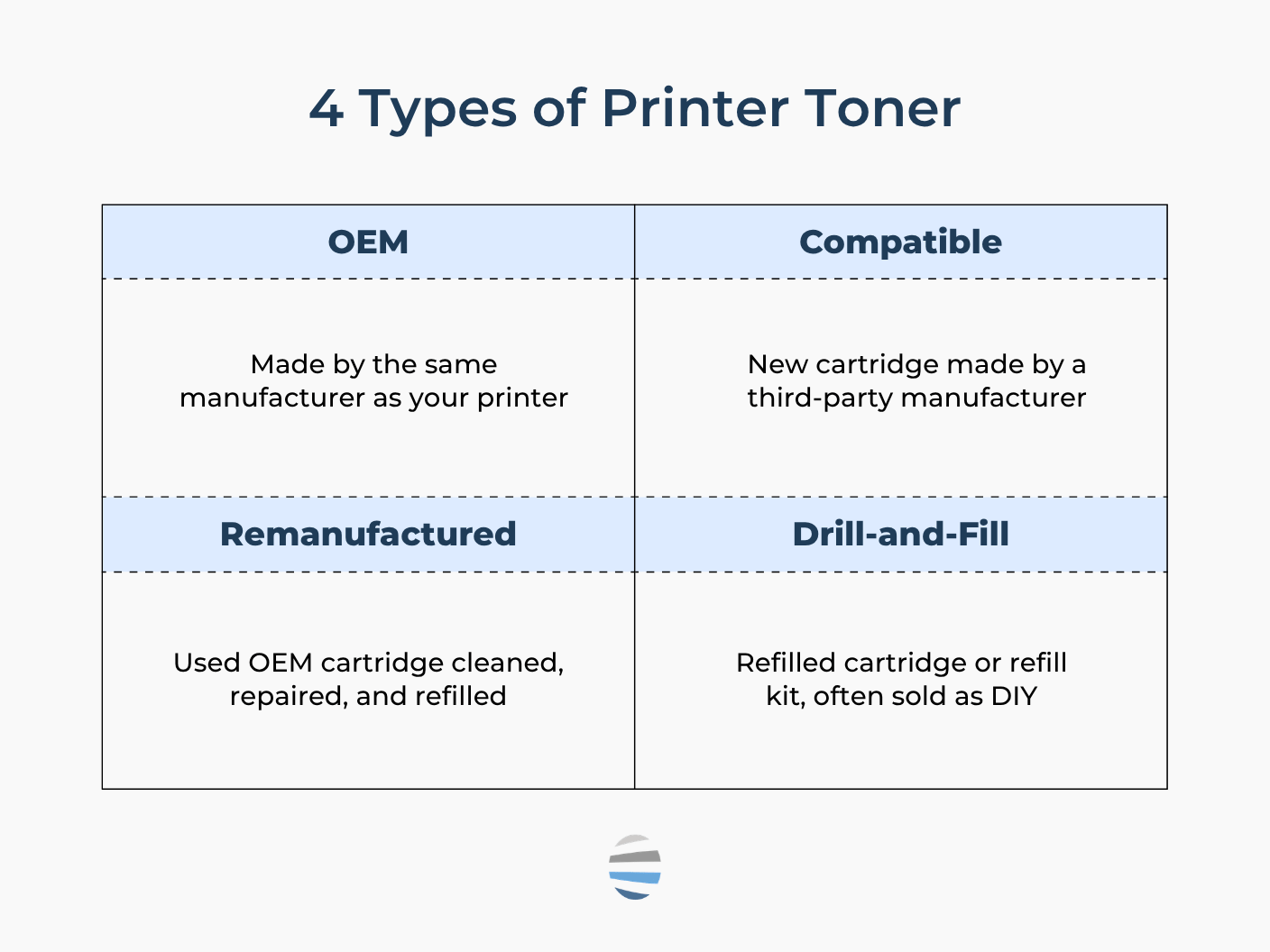
The four main types of printer toner are OEM toner, newly manufactured compatible toner, remanufactured toner, and drill-and-fill toner. OEM toner offers the highest reliability. Compatible toner lowers cost. Remanufactured toner can be a middle-ground option. Drill-and-fill toner is the cheapest, but it also carries the most risk.
Comparing the 4 Types of Toner
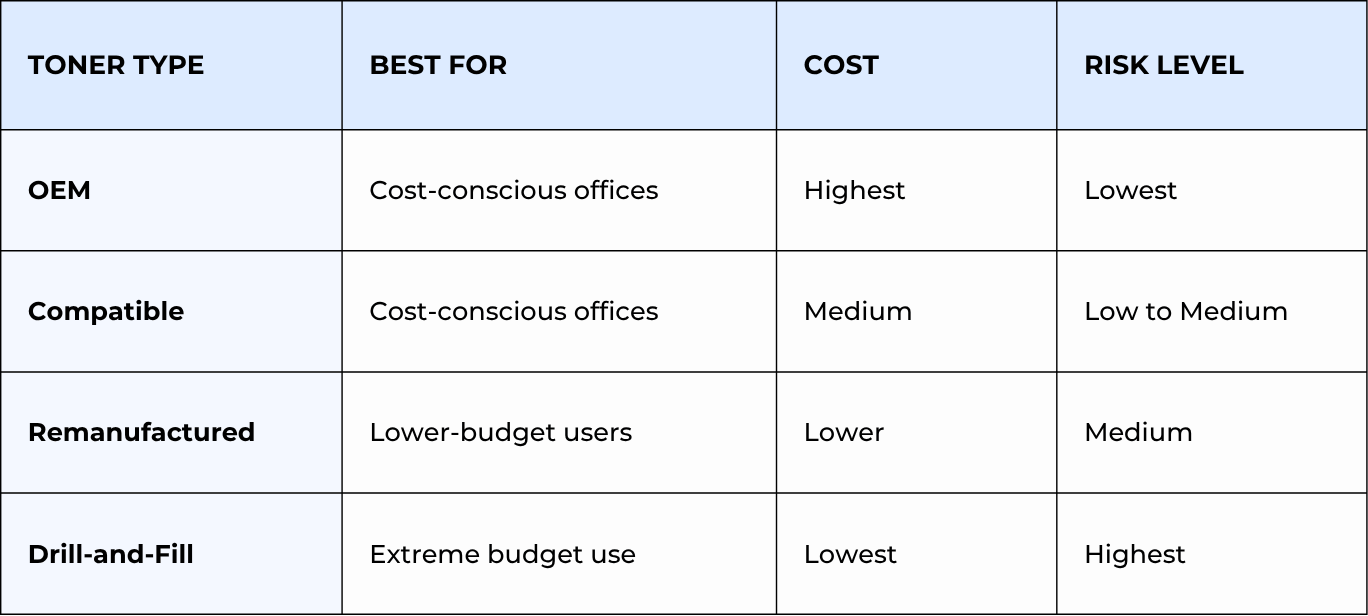
Below, we explore each type of toner and the specific situations in which they can be used.
What Is OEM Toner?
OEM (Original Equipment Manufacturer) toner is made by the same manufacturer as your printer. Because it is designed and tested for that specific machine, it is usually the most reliable and highest-quality option.
OEM toner costs more, but it is often worth it for businesses that need:
- Consistent print quality
- High print volume
- Fewer supply issues
- Less downtime
If your printer is important to daily operations, OEM toner is usually the safest choice.
Learn more about OEM toner here.
What Is Newly Manufactured Compatible Toner?
Newly manufactured compatible toner is a brand-new cartridge made by a company other than the original printer manufacturer. It is designed to work with specific printer models, usually at a lower cost than OEM.
This option can work well for businesses that want to save money without taking on as much risk as lower-end refill options.
One example is Xerox Everyday Toner, which Xerox offers for a range of major printer brands such as Brother, Canon, and Ricoh. If you’re considering newly manufactured compatible toner, Xerox Everyday Toner is one option we can help you source.
Compatible toner is often a good fit for offices that want:
- Lower supply costs
- Decent print quality
- A more affordable option than OEM
However, be aware that these types of toners aren’t available for newly released models, as it takes time to design and test them.
What Is Remanufactured Toner?
Remanufactured toner is a used name-brand cartridge that has been cleaned, repaired, and refilled with compatible-quality toner for reuse. It costs less than OEM toner, but the quality can vary depending on who refurbished it.
This is a popular choice among businesses. And, while it can be a reasonable option for budget-conscious buyers, it’s important to read reviews, check for warranties, and buy from a reputable seller. Also, keep in mind that you’ll have to wait for remanufactured toners to be available for newly released printers.
A poorly remanufactured cartridge can lead to weaker print quality or cartridge failure.
If you do thorough research before purchasing, remanufactured toners can be a solid choice for your business.
What Is Drill-and-Fill Toner?
Drill-and-fill toner is a refill approach where the user reuses the same cartridge and simply adds toner back into it instead of replacing the full cartridge. It is often sold as a low-cost cartridge or DIY refill kit and can be found online at stores like Best Buy.
While reusing the same cartridge may save money upfront, it also comes with the highest risk. According to a BLI study, the average failure rate for the refill toner cartridges they tested was 70% compared to OEM toner. Common problems include:
- Poor print quality
- Spilled toner
- Shorter cartridge life
- More printer issues
Due to the risks involved, we don’t recommend this type of toner for any business. It’s best to avoid this type of toner altogether.
How Do You Choose the Right Toner?
The best toner depends on four things: how much you print, your budget, the print quality you need, and how much downtime you can tolerate.
Here's a simple way to decide:
- Choose OEM toner if reliability and print quality matter most.
- Choose compatible toner if you want to lower costs but still want a dependable option.
- Choose remanufactured toner if budget matters and you are willing to research carefully.
- Avoid drill-and-fill toner if your printer is important to your workflow.
What Toner Choice Means for Long-Term Printing Costs
It’s also important to understand how your toner choice will affect cost-per-page, toner yield, toner longevity, downtime, and maintenance costs over time.
Oftentimes, a cheaper cartridge can cost you more over time because of issues like:
- Reprints
- Service calls
- Supply errors
- Lower yield
- Lost staff time
That is why it helps to look beyond shelf price. Page or toner yield tells you how many pages a cartridge is expected to print, cost per page helps you compare real value, and knowing how long toner lasts can help with replacement timing and supply planning.
Changing and Recycling Used Toner Cartridges
Once you choose the right toner, follow your vendor’s instructions for replacing it properly.
If you use an auto-toner replenishment program, make sure your team avoids toner phoners and common toner shipment mistakes that can mess up the delivery process. These mistakes include:
- Changing toner too early
- Using toner for the wrong machine
- Ignoring system updates
After your toner is empty, follow the recommended recycling steps for that cartridge brand or vendor to ensure the safe disposal of used supplies.
FAQ
How many types of printer toner are there?
There are four common types of printer toner: OEM, newly manufactured compatible, remanufactured, and drill-and-fill.
What is the best type of toner to use?
For most businesses, OEM toner is the best choice for reliability and print quality. Compatible toner can also be a strong option when it comes from a reputable source.
How do I know what toner to choose?
Start with your print volume, budget, print-quality needs, and tolerance for downtime. The right toner should support your workflow.
What lasts longer, toner or ink?
In general, toner cartridges often last longer in storage and are commonly used in higher-volume laser printing, while ink is more often associated with inkjet printers and different use cases. Learn more about the differences between toner and ink here.
Choose Toner Based on Value Instead of Price
The best toner choice for you will depend on how your printer is used and how much risk your business can afford to take.
If your business depends on reliable printing, OEM toner is often worth the higher cost. If you want to lower supply costs, compatible or remanufactured toner may make sense, depending on the source. And if you are considering drill-and-fill toner, it is worth thinking carefully about whether the savings outweigh the risk.
If you want to make toner ordering easier and more predictable. Learn how auto-toner shipments help you avoid ordering mistakes and downtime.
Need help choosing between OEM, compatible, or remanufactured toner? Contact us so we can help you find the right toner for your printer and print volume.
