 Skip to main content


Office productivity doesn’t just involve computers, software, or cloud storage. Documents are still a major part of how many businesses operate, and you need a printer to print them out.
And since documents are still such a critical part of business operations, why manage them with multiple devices when one machine can often do the job?
If you've been shopping for a printer for your business, school, healthcare practice, or organization, you've probably come across the terms all-in-one printer and multifunction printer (MFP). While these devices are extremely common, many buyers still aren’t sure what they do, how they differ from a standard printer, or whether they're worth the investment.
In this guide, we'll use our expertise on printers to explain exactly what an all-in-one printer is, how it works, who it's best for, and whether it's the right fit for your business.
Short Answer: What Is an All-in-One Printer?
An all-in-one printer, also called a multifunction printer (MFP), is a device that combines printing, copying, scanning, and often faxing into a single machine. Businesses use all-in-one printers to reduce equipment costs, save office space, simplify document workflows, and improve productivity.
Table of Contents
- What Is an All-in-One Printer?
- What Functions Does an All-in-One Printer Include?
- What Is the Difference Between a Regular Printer and an All-in-One Printer?
- How Does an All-in-One Printer Work?
- What Are the Benefits of an All-in-One Printer?
- What Are the Disadvantages of an All-in-One Printer?
- Who Should Buy an All-in-One Printer?
- Are All-in-One Printers Worth It?
- How Much Does an All-in-One Printer Cost?
- FAQ
- Key Takeaways
What Is an All-in-One Printer?
An all-in-one printer is a printer that handles multiple document-related functions from a single device.
Instead of buying separate machines for printing, scanning, copying, and faxing, an all-in-one printer combines those capabilities into one machine.
By combining these functions, an all-in-one printer helps organizations manage documents more efficiently.
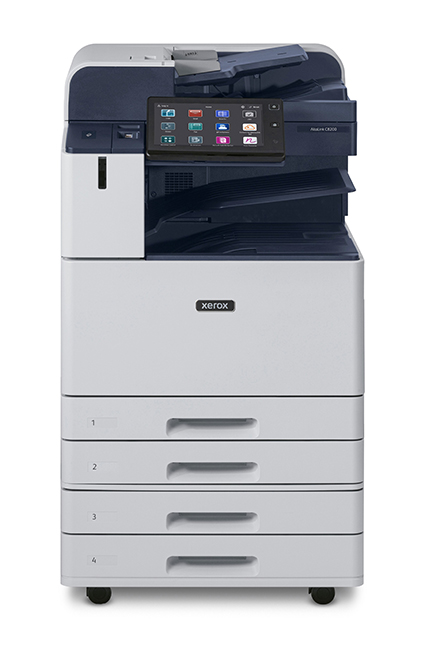
You'll often hear the terms all-in-one printer, multifunction printer (MFP), and multifunction device (MFD) used interchangeably. In most cases, they mean the same thing.
An example of an MFP, the AltaLink C8200 Series model
What Functions Does an All-in-One Printer Include?
Most all-in-one printers include four core functions:
- Printing
- Copying
- Scanning
- Faxing
However, modern multifunction printers can do much more than that.
Many business-class devices let users scan documents directly to email, cloud storage platforms, network folders, and document management systems. Some models include Optical Character Recognition (OCR), which converts scanned documents into searchable and editable files.
For example, a healthcare office might scan patient paperwork directly into an electronic records system. A law firm might scan contracts into a document repository. A school might digitize forms and administrative paperwork for easier access and storage.
The capabilities of an all-in-one printer often go far beyond simply making copies.
What Is the Difference Between a Regular Printer and an All-in-One Printer?
The biggest difference between a regular printer and an all-in-one printer is functionality.
A standard printer mainly just prints documents. While some models do offer additional features, their main purpose is to produce printed output.
An all-in-one printer performs multiple tasks. In addition to printing, it can scan, copy, and often fax documents. Many models also support advanced workflows such as scan-to-email, scan-to-cloud, mobile printing, and document automation.
Businesses with lots of paperwork can eliminate the need for multiple devices and streamline document workflows by investing in an all-in-one printer.
If you only print occasionally, a standard printer may be all you need.
How Does an All-in-One Printer Work?
An all-in-one printer combines several technologies inside a single device.
The print engine is responsible for creating physical documents. The scanner captures paper documents and converts them into digital files. The copier uses the scanner and print engine together to duplicate documents. If equipped, the fax system sends documents through a phone line or digital fax service.
Modern multifunction printers also connect to networks, computers, cloud applications, and mobile devices. This means users can print from virtually anywhere, scan directly into digital workflows, and securely share information across teams.
As businesses continue moving toward digital document management, many organizations use their multifunction printer as a bridge between paper-based and digital processes.
What Are the Benefits of an All-in-One Printer?
Saves Space
One multifunction printer can often replace multiple pieces of equipment.
You don’t need extra room for a separate printer, scanner, copier, and fax machine. All you need is space for a single device.
Improves Productivity
With one device, employees don’t need to spend extra time switching between devices.
A multifunction printer centralizes common document tasks and reduces unnecessary steps.
Supports Digital Transformation
Modern businesses rely heavily on digital information.
An all-in-one printer helps organizations convert paper documents into searchable digital files that are easier to store, access, and share.
Simplifies Document Workflows
Many all-in-one printers support automated workflows, with some even using AI.
Users can scan directly to email, cloud storage, document management systems, or business applications without requiring additional software.
Reduces Equipment Costs
Purchasing and maintaining one device can be less expensive than managing several separate machines.
Organizations can reduce service costs, supply management, and energy consumption by consolidating equipment.
What Are the Disadvantages of an All-in-One Printer?
While all-in-one printers have many benefits, they aren't perfect for every situation. Here are some disadvantages:
Higher Initial Investment
A multifunction printer typically costs more upfront than a basic printer because it includes additional hardware and capabilities.
One Device Handles Multiple Functions
If your device needs service, you may not be able to print, copy, and scan while repairs are underway.
More Features Than Some Users Need
If your organization doesn’t handle many documents, you may never use all the available functionality.
For those environments, a simpler device may be more cost-effective.
However, manufacturers offer all-in-one printers in a wide range of sizes and capacities, so it’s possible to find a device to match your actual needs
Who Should Buy an All-in-One Printer?
All-in-one printers are ideal for organizations that regularly work with documents.
Common examples include:
- Small Businesses
- Healthcare Organizations
- Schools and Universities
- Legal Offices
- Growing Organizations
Are All-in-One Printers Worth It?
An all-in-one printer is worth it for most businesses. It has more functionality, greater efficiency, and better document management capabilities than a standard printer.
Organizations that regularly print, scan, copy, or share documents can increase productivity by consolidating these tasks into a single device.
That said, the right choice depends on your specific needs. Businesses that handle few documents may not need all of the capabilities an MFP provides.
If you're still evaluating your options, you may also find these resources helpful:
- A3 vs. A4 Printers: Which Is Right for Your Business?
- Inkjet vs. Laser Printers: Which Should You Choose?
How Much Does an All-in-One Printer Cost?
The cost of an all-in-one printer will vary based on size, speed, features, and monthly print volume.
Smaller desktop models designed for low-volume environments are often on the lower end of the cost spectrum.
Departmental printers designed for larger workgroups cost more but provide greater durability, faster speeds, and advanced workflow capabilities.
Organizations with higher print volumes often can benefit from an all-in-one printer because the total cost of ownership is frequently lower over time.
It’s best to evaluate your monthly print volume, document workflows, number of users, and long-term business goals before selecting a device.
Check out our blog on How to Choose a Printer for Your Budget and Business Needs for more information.

FAQ
Which function is often included in an all-in-one printer?
Most all-in-one printers include a printer, scanner, copier, and often a fax machine. Many modern models also include advanced scanning and workflow tools.
What are common problems with all-in-one printers?
Common issues include paper jams, connectivity problems, supply replacement needs, and occasional service requirements. Regular maintenance helps minimize these problems.
Should I buy an all-in-one printer?
If your organization regularly prints, scans, copies, or manages documents, an all-in-one printer combines these functions into a single device.
Are all-in-one printers good for small businesses?
Yes. Many small businesses choose all-in-one printers because they save space, improve productivity, and reduce the need for multiple devices.
Can an all-in-one printer scan documents to email?
Most modern business-class multifunction printers can scan documents directly to email, cloud storage platforms, and network folders.
Key Takeaways
- An all-in-one printer combines printing, scanning, copying, and often faxing into one device.
- Multifunction printers help businesses save space and simplify document workflows.
- Modern MFPs support digital document management and cloud-based workflows.
- All-in-one printers are ideal for businesses, schools, healthcare organizations, and legal offices.
- The best printer depends on your organization's document volume, workflow requirements, and growth plans.
Is an All-in-One Printer the Right Choice for Your Business?
The difference between a regular printer and an all-in-one printer goes beyond simply having more features. The right device can impact productivity, document management, employee efficiency, and even long-term operating costs.
Now that you have a better understanding of what an all-in-one printer is, how it works, and who benefits most from one, it’s time to determine which type of device best fits your organization.
At Strategic Technology Partners of Texas, we've spent more than 40 years helping businesses and other workplaces across North Texas and southern Oklahoma find the right print technology for their needs. We’re here to help you make an informed decision.
If you're starting your printer buying journey, download our Business Printer Buyer's Guide. It will walk you through the key considerations, common mistakes, and important questions to ask before making your investment.
