Office Process Automation

What Is an Enterprise Management System (EMS)?

Submitted by Karla Metzler on

Most organizations don’t wake up one morning and decide they need an Enterprise Management System. What usually happens instead is that files live in one platform, approvals happen in another, and teams waste time trying to piece everything together.

In fact, research from IDC has shown that knowledge workers can spend nearly 16% of their time searching for information. That’s a full day each week lost to digital scavenger hunts.

At Strategic Technology Partners of Texas (STPT), we’ve seen businesses struggle because their tools don’t work together.

That’s why understanding the definition of an Enterprise Management System (EMS) is important.

In this guide, we’ll explain what an EMS is, how it differs from Content Management Systems (CMS) and Document Management Systems (DMS) platforms, what problems it solves, and how to know whether your organization is ready for one.

Is a Cloud Document Management System Right for Your Business?

Submitted by Karla Metzler on

“Move it to the cloud.”

If you’ve been in any IT or operations meeting in the last few years, you’ve probably heard that phrase more than once. Cloud tools promise flexibility, scalability, and easier access to all your files.

But is it the right solution for your business? The truth is, not every organization needs to rush into cloud document management. At least not without a plan.

At Strategic Technology Partners of Texas (STPT), we’ve worked with businesses at every stage of the document journey. We’ve taken them from paper-heavy environments to fully digital workflows. We’ve learned that the cloud can be powerful, but the right fit depends on your workflows, risk tolerance, and long-term goals.

In this guide, we’ll walk through when a cloud-based document management system makes sense, when it doesn’t, and how to evaluate your next move with confidence.

Table of Contents

CMS vs. DMS - What’s the Difference and Which One Does Your Business Need?

Submitted by Keith Metzler on

Many organizations start researching CMS (content management systems) only to run into another acronym: DMS (document management system). These sound similar, but the truth is they solve very different business problems.

Not knowing the difference between a CSM and a DMS can lead to the wrong system choice, resulting in messy workflows, compliance gaps, and wasted budget. When you understand what each platform is built to do, the decision becomes much clearer.

In this guide, we’ll compare CMS vs. DMS so you can determine which system actually fits your environment.

Table of Contents

Customer Success Story: Bluebonnet Feeds Improves Printer Uptime with Local Service

Submitted by Karla Metzler on

Tired of unreliable printer service from your print vendor? See how Bluebonnet Feeds improved uptime and support with a smarter local solution.

When your team depends on reliable printing every day, slow service and constant supply headaches can quietly drag down productivity. That was the reality for Bluebonnet Feeds in Ardmore, Oklahoma.

After partnering with Strategic Technology Partners of Texas (STPT), they gained faster support, automated supply fulfillment, and more confidence in their print environment.

If you’re currently evaluating providers, read our guide, “5 Signs of a Quality Print Vendor.”

Below is a look at what changed for Bluebonnet Feeds and why it worked.

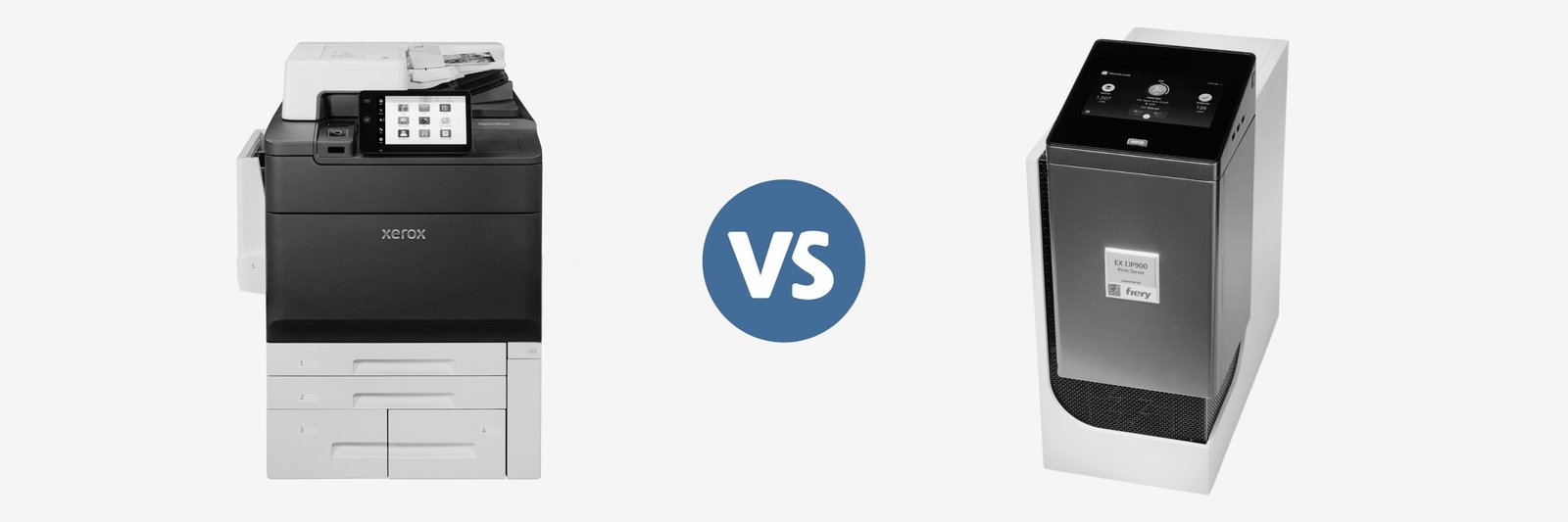
Is Fiery the Right Digital Front End (DFE) for Your Print Environment?

Submitted by Keith Metzler on

If you own a production printer and wonder why you’re not getting flawless output and are struggling with color consistency, file issues, or slow turnaround, don’t blame your printer just yet.

Here’s a truth we see often in the field: most production print challenges don’t start at the printer itself. They start earlier in the workflow, where files are processed, colors are interpreted, and jobs are managed. Digital front ends (DFEs) play a critical role in production printing, and Fiery, in particular, comes up often in these conversations.

Before we go any further, let’s be upfront. At Strategic Technology Partners of Texas, we work closely with Xerox production printers, many of which offer Fiery digital front ends. We install them, support them, and train customers on them regularly.

What Is a CMS (Content Management System)? A Practical Guide for Businesses

Submitted by Keith Metzler on

Have you ever heard your boss say things like CMS, DMS and wondered what exactly it meant?

A CMS is one of the most commonly used digital tools. From individuals to businesses, organizations, and schools will use these tools. For businesses and organizations in particular, as teams grow and work becomes more digital and more remote, content chaos tends to grow right along with it.

At Strategic Technology Partners of Texas (STPT), we’ve spent nearly 40 years helping organizations manage not just printers, but the documents and content that flow through them every day. While we partner with Xerox and work closely with platforms like DocuShare, our job isn’t to push software. It’s to help businesses understand what they actually need, and just as importantly, what they don’t.

In this guide, we’ll break down what a CMS is, what problems it solves, how it differs from document-focused systems, and how to tell if a CMS is the right next step for your organization.

How to Optimize Your Copier/Printer Fleet for Medium-Sized Businesses

Submitted by Karla Metzler on

If you’re running a medium-sized business, your printer fleet probably didn’t start out complicated. A few devices here, a few there, and things worked well enough. But over time, growth has a way of sneaking up on your print environment.

Suddenly, IT is fielding toner requests again. Someone complains that the printer “isn’t working” (but can’t explain how). Finance wants to know why printing costs seem higher this quarter. And somehow, there are now five different printer models doing roughly the same job.

According to industry research, businesses often underestimate their true printing costs by as much as 30–50%, largely due to poor visibility and decentralized management. That gap becomes especially noticeable in mid-sized organizations, where growth outpaces process.

What Is a Document Management System (DMS)? A Practical Guide for Businesses

Submitted by Keith Metzler on

Think about how much time employees spend searching for information instead of doing their actual job. If you’re losing hours every week to shared drives, filing cabinets, email attachments, and “final_v7_REALLYFINAL.pdf,” it’s time for a change.

Most businesses don’t have a document problem because they lack documents. They have a document problem because they lack control.

Contracts live in inboxes. Records sit in boxes. Scanned forms are saved “somewhere on the network.” And when someone needs the right version, at the right time, it turns into a scavenger hunt.

What Is Xerox’s Configuration Watchdog Security System?

Submitted by Byanka Ramos on

Have you ever had a printer mysteriously “act up” after someone changed a setting or discovered a security feature turned off without anyone knowing? Misconfigurations are one of the most common causes of security vulnerabilities in office technology. Something as simple as an incorrect setting can lead to a cybersecurity incident.

Printers are no exception; in fact, they’re some of the most vulnerable devices. It’s easy for settings to get tweaked, features to get disabled, and security gaps to quietly open. Most teams don’t realize anything happened until IT is troubleshooting or a risk assessment reveals an exposure.

This is where Xerox’s Configuration Watchdog becomes a powerful safety net for organizations that rely on secure, well-managed print environments.

Before we get into the details, the goal of this blog is simple:

Who Should Manage Your Print Environment: IT or a Print Vendor?

Submitted by Byanka Ramos on

If you walk into a growing business and see a different printer in every corner, with some new and some barely hanging on, you can usually guess what’s happening behind the scenes. It’s a situation where the print environment is managing the business, not the other way around.

And here’s a stat worth considering as you think about your office: organizations can waste up to 3% of their annual budget on unnecessary printing expenses. If your business doesn’t “own” the print environment, it can hurt your bottom line.

As businesses scale past 15+ devices, this problem will only get worse. A badly managed print environment can lead to costs rising, downtime becoming normal, IT getting buried in random printer tickets, and leadership starting to wonder, “Is this really the best we can do?”

Subscribe to Office Process Automation