Printer Fleet Management

​What Is a Printer/Copier’s Duty Cycle? 

Submitted by Keith Metzler on

If you look at a printer’s specifications sheet, you’ll likely find two numbers related to volume. One describes an impressive maximum. The other recommends a much lower amount. Which number should guide your decision?

The larger number is usually the printer's duty cycle. It’s useful, but easy to misunderstand. While the duty cycle tells you a printer's maximum monthly capacity, it doesn't tell you how many pages you should plan to print each month.

At Strategic Technology Partners of Texas, we have matched printers to business workloads for more than 40 years. Here is what duty cycle means, what it tells you, and which number matters most for routine use.


What Is e-Valet Cloud? Benefits, Features, and Who It's For

Submitted by Karla Metzler on

Managing printers shouldn't take more time and resources than necessary. But as businesses grow, keeping up with printer drivers, device access, security requirements, and printing costs can challenge IT teams.

According to Quocirca's Managed Print Services Landscape Report, 42% of organizations with mixed-manufacturer printer fleets identify securing printing across a hybrid workforce as their top challenge. In comparison, 32% of organizations using a single manufacturer's devices cite this as their top challenge.

As print environments grow more complex, businesses need ways to simplify administration without sacrificing security or control.

What is eValet Cloud Print? Features, Benefits, and Who It's For

Submitted by Karla Metzler on

Keeping office printers running smoothly sounds simple enough, but anyone who's managed a printer fleet knows how quickly things can get complicated.

A printer disappearing, a driver update causing compatibility issues, or configuring a new device for the office can pull your IT team away from valuable work. Managing printers from multiple manufacturers adds even more complexity with different drivers and print queues.

At Strategic Technology Partners of Texas (STPT), we've spent over 40 years helping organizations simplify their printing processes.

Our e-Valet Cloud Print solution makes everyday printing easier by reducing the need for traditional print servers, simplifying driver management, and automating printer deployment.

In this article, we'll explain what e-Valet Cloud Print is, how it works, its benefits, and whether it's the right fit for your business.

In-House Printing vs. Outsourcing for Schools: Which Is Right for Your District?

Submitted by Karla Metzler on

The start of a new school year has a way of turning “we need this printed soon” into “we need 1,500 copies by tomorrow.”

Schools often need to update enrollment packets, teachers need instructional materials, and administration has upcoming board meetings where they need to review the student handbook.

For schools that regularly outsource larger print jobs, situations like these can raise a reasonable question: Would it make more sense to bring some of our production printing in-house?

At Strategic Technology Partners of Texas (STPT), we work with schools and other organizations that are weighing this exact decision. Neither option is automatically better. Outsourcing can be convenient and cost-effective for occasional work, while in-house production printing can provide more control when print volume, turnaround times, and outsourcing expenses begin to grow.

Duty Cycle vs. Recommended Print Volume: What’s the Difference? 

Submitted by Karla Metzler on
Video


When looking at printer specifications, you’ll likely see two numbers that look like they describe the same thing: monthly duty cycle and recommended monthly print volume. They, however, don’t. Knowing the difference can help you choose a printer that fits your workload and avoid unnecessary service calls, downtime, and early replacement costs.

In the more than 40 years we’ve been helping organizations match office equipment to their real printing needs, we often help people know which number they should actually use.

The short answer: A printer’s duty cycle is the maximum number of pages or images it is designed to produce in a single month. Its recommended monthly print volume is the workload it is designed to handle consistently. For everyday use and printer selection, follow the recommended monthly print volume.

Table of Contents

​Why Is Print Volume Important for a Printer? (How to Check It) 

Submitted by Karla Metzler on
Video


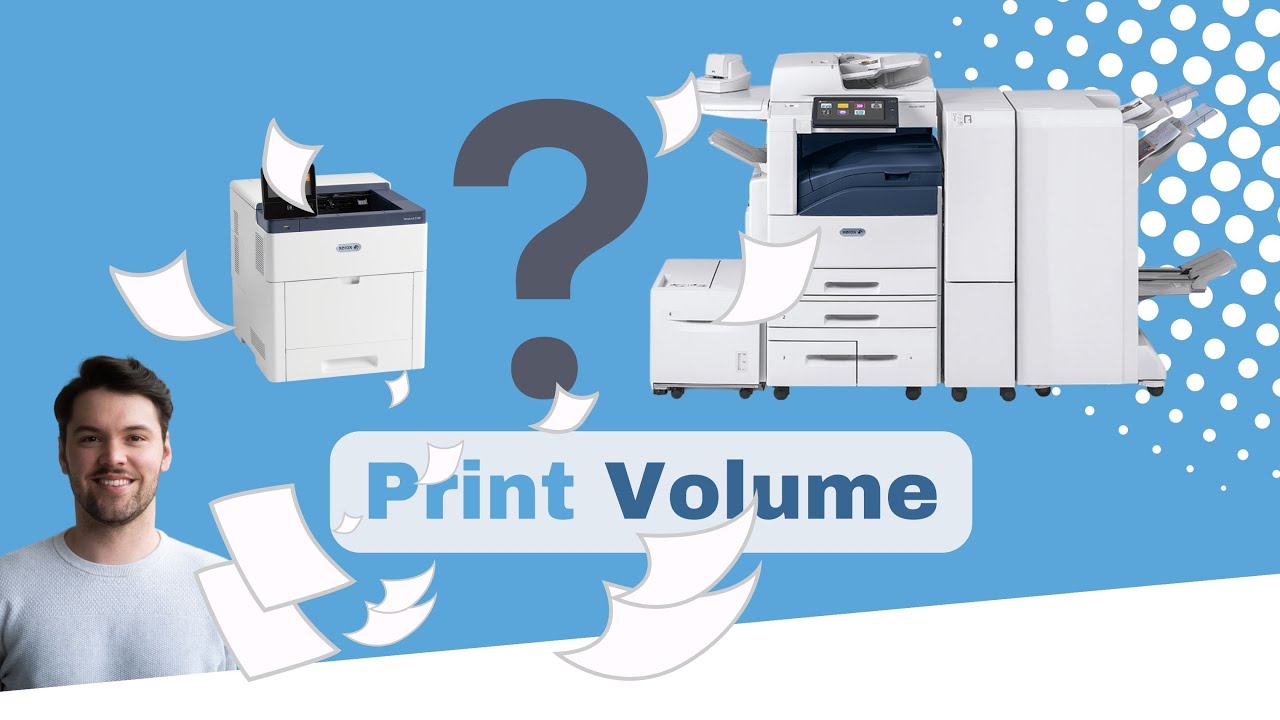
Beyond cost, print volume is arguably the most crucial factor in deciding which printer or copier to purchase. Your monthly print volume helps determine whether your printer will be able to handle the amount your office prints each month.

Overusing a printer with too little capacity can lead to more service issues and premature wear. A machine built for far more volume than you need can also cost more than necessary. In both cases, the printer is poorly matched to the workload

Strategic Technology Partners of Texas has spent more than 40 years helping organizations choose and maintain office printers. We have seen how overlooking print volume can lead to avoidable service calls, downtime, and replacement costs.

What Is Zero Trust Print Security? Principles, Risks and How to Start

Submitted by Karla Metzler on

Your firewall may be doing its job perfectly and still leave one important assumption untouched: the printer behind it must be safe.

Modern business printers are network-connected devices that receive, transmit and sometimes store sensitive information. But they’re often monitored less closely than computers, servers and other endpoints. People forget to change default passwords, delay firmware updates, and may be able to print or change settings without the right controls.

Zero trust print security means you don’t automatically trust a user or device because it is inside the company network. Zero Trust requires verifying and limiting access based on the request.

How to Go Paperless: A Practical Guide for Businesses

Submitted by Karla Metzler on

Going paperless can seem like an impossible task for your business if you don’t know where to start.

Paper has been part of the modern workplace for centuries, but it's also one of the biggest sources of wasted time and money in many organizations. 

In the U.S. alone, offices go through approximately 12.1 trillion sheets of paper a year. 

Businesses can lose thousands of dollars every year due to time spent searching for misplaced documents, manually routing paperwork, and maintaining physical filing systems.

But going paperless doesn’t mean you throw away every filing cabinet overnight or eliminate printers altogether.

For many businesses, going paperless simply means replacing paper processes with smarter digital options.

What Is a Printer Queue? How It Works (and Why It Matters)

Submitted by Byanka Ramos on

If you’ve ever hit 'Print' and watched your document seemingly vanish, it’s probably just sitting in the printer queue.

Printer queues work behind the scenes every time you print a document. Understanding how they work, whether you're printing a single PDF at home or managing multiple office printers, can help you troubleshoot delays and keep work moving.

In the 40 years we’ve been servicing printers, we've seen how something as simple as a poorly managed print queue can slow down an entire workflow.

In this article, we’ll explain what a printer queue is, how it works, and why print jobs sometimes get stuck.

Table of Contents

Is Print Management Software Right for Your Legal Organization? (Pros and Cons)

Submitted by Karla Metzler on

Law firms generate a staggering amount of paperwork. From contracts and court filings to discovery documents and legal briefs. All these documents move through the office every day. And while many firms have embraced digital workflows, printing is still a vital part of legal work.

But when it comes to printing, every printed page carries both a cost and a responsibility.

A confidential document that’s left sitting on a printer could lead to client confidentiality issues. Plus, many firms can’t accurately track printing costs by client or matter, so it’s harder to recover expenses and understand where money is being spent.

As a print vendor with 40 years of experience helping organizations improve their print environment, we've seen how the right print management software can help law firms strengthen document security. It can also improve visibility into printing costs and simplify day-to-day workflows.

Subscribe to Printer Fleet Management